Lauren Sansaricq (b. 1990) grew up in Colombia County, NY where from an early age she was not only exposed to the beauties of the Hudson Valley, but also under the teaching of Thomas Locker, was exposed to the traditional painting techniques of the Hudson River School. Taking Mr. Locker’s advice Lauren received a classical education in drawing and painting at the Grand Central Academy of Art in NYC. She has three times been awarded the Hudson River Fellowship where she has continued to study nature and produce paintings in the tradition of the Hudson River School. Lauren’s paintings have been exhibited and collected in venues throughout New York State including Manhattan. One of Lauren’s paintings was recently featured in the New York Times representing “The Great Hudson River Exhibition.”
This Thursday at 4pm at the Chapel Arts Center at Saint Anselm College. I will be discussing and demonstrating , the techniques of traditional landscape. I will walk through the process of transitioning from the Dead Color Under-painting to the final Glazing and Scumbling.
In this demo specifically I will be approaching “How to paint a Nocturnal Landscape- a Moon Scene”. It should be a wonderful event!
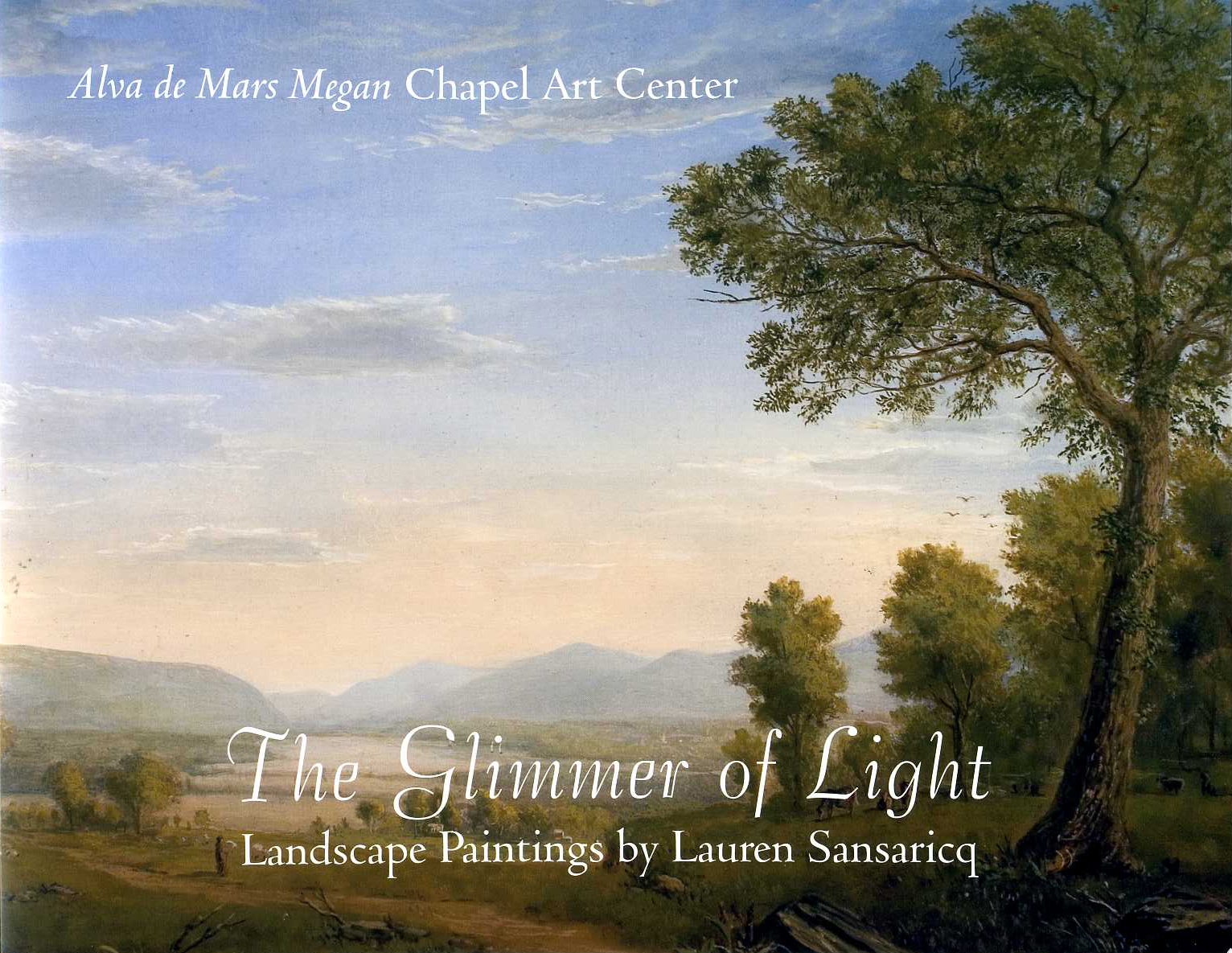
“Hawthorne Fine Art is pleased to announce an exhibition of Lauren Sansaricq’s landscape paintings at the Alva de Mars Megan Chapel Art Center at Saint Anselm College in Manchester, New Hampshire. The Glimmer of Light: Landscape Paintings by Lauren Sansaricq will run from September 28 to December 6, 2012, and an opening reception for the exhibition will be held on Thursday, September 27 from 6:00 to 8:00pm.
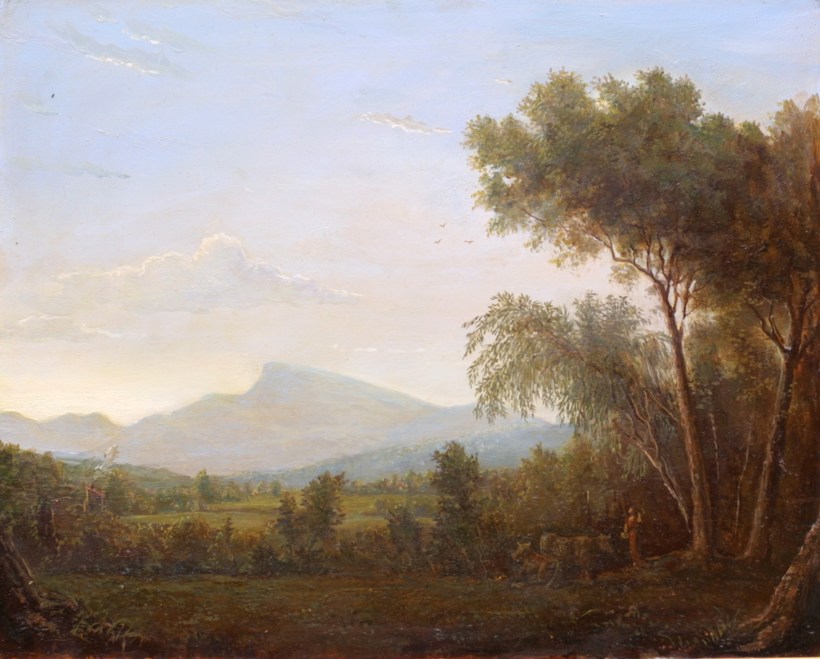
Lauren Sansaricq, Mt. Chocorua, 2012
The Chapel Art Center has recently featured examples of American landscape painting, as well as local and emerging artists. A native of Columbia County, New York, Lauren Sansaricq (b.1990) trained with Thomas Locker (1937–2012), a celebrated landscape painter and children’s book author/illustrator, in the traditional manner of the Hudson River School. Sansaricq’s work captures a similar sense of wonder experienced by the nineteenth century landscape painters working primarily in New York’s Catskill Mountain region. As Jennifer Krieger explains, “Lauren is a tireless technician who can hone in on the most subtle details of nature within its grandest views. She demonstrates an artistic prowess and commitment to faithful design which is not only rare for her age but also uncommon for the age in which we live.” Like the first generation of Hudson River School painters, Sansaricq has also proven herself to be a true artist-explorer. She has broadened the scope of her work to include locations outside the Hudson Valley, including the White Mountains of New Hampshire and locations in France and Italy.
In conjunction with this special exhibition, numerous special events have been planned. David Dearinger, Ph.D., Susan Morse Hilles Curator of Paintings and Sculpture at The Boston Athenaeum, will present “The Hudson River School: An Introduction” on Thursday, November 8 at 4:00pm. This lecture will provide a scholar’s insight into the significance of America’s first indigenous art movement, offering an important supplement to Ms. Sansaricq’s meditative and technically rigorous paintings.
Additionally, Fr. MacLellan will be leading a director’s tour of the exhibition at 1:00pm on Saturday, October 20. On Thursday, October 25 at 4:00pm, Ms. Sansaricq will discuss the subject matter and technical practice that ties her work to historic American landscape painting, yet offers a fresh look at our landscape today. Lastly, a special music performance will feature American Romantic compositions performed by acclaimed pianist Alpin Hong on Friday, November 30 at 7:30pm.
Since the opening of Nature’s Poetry, held at Hawthorne Fine Art last winter, Lauren has completed her training at the Grand Central Academy in NYC. We’re excited for this next step in Lauren’s career and will be producing an exhibition catalogue for The Glimmer of Light illustrating her paintings. A PDF of the Nature’s Poetry catalogue is available on our website.
For further information about this exhibition and the related special events, please visit www.anselm.edu/chapelart.”
The genesis of landscape painting as an art onto itself initially developed from the great painter, Claude Lorrain. Other artists who helped spear head this new form of classical art were Poussin and Carracci. Landscape painting has always been a part of art, yet mostly before Carracci and Claude , landscape was seen as more of a background for figure painting. As landscape painting progressed within history the size of the figures in the landscape became smaller and eventually vanished. To me the figure in landscape painting is a crucial thing, no matter how large or small. I believe the figure in the landscape helps the viewer to relate to the scene emotionally. It can also be an interesting devise, for example a smaller figure can make the landscape feel more epic.
“Pastoral Scene in Mountains” 16x20in. oil on panel
“Sunset in The Mountains” 16x24in. oil on panel
For example in the two paintings above, both depict the same mountains (North Carter and Imp, in NH), but the figure in both of them is used in different ways. The painting on top has more a feeling intimacy, gazing at the view from under the bow of a tree. Where as in the painting below, the figure is much smaller which gives the mountain and the whole space more a feeling of grandeur.






 laurensansaricq.com